

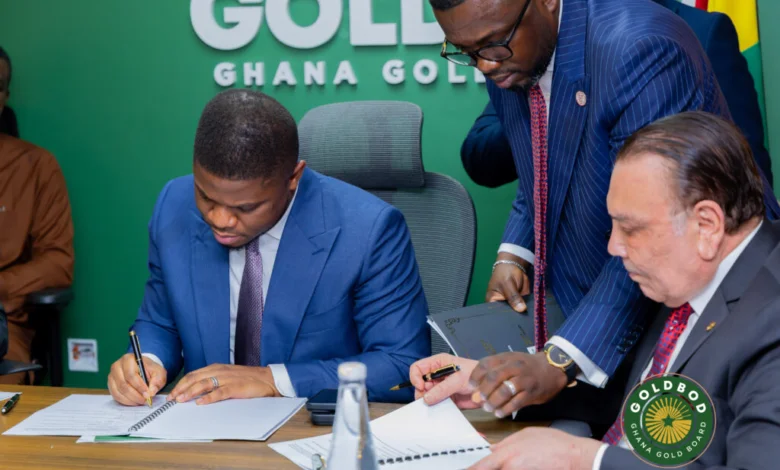
ACCRA – In a decisive move toward resource sovereignty, the Ghana Gold Board (GoldBod) has entered into a strategic partnership with the Gold Coast Refinery to process artisanal gold locally. This landmark agreement, signed this week, seeks to dismantle the nation’s historical reliance on raw gold exports and capture the premium value lost to offshore processing. Under the terms of the deal, Ghana will commence the local refining of 1,000 kilograms of gold per week starting February 2026, marking a fundamental pivot in the management of the country’s most precious mineral resource.
The initiative is underpinned by a technical and commercial alliance with South Africa’s Rand Refinery, currently the only London Bullion Market Association (LBMA) accredited refiner on the continent. This partnership is designed to provide the rigorous technical supervision and mentoring necessary for the Gold Coast Refinery to achieve its own LBMA certification. By aligning with international benchmarks for purity and ethical sourcing, the government aims to position Ghana as a premier hub for refined bullion, ensuring that the “Ghana Brand” commands a high premium on the global market.
The economic impetus for this shift is significant, following a year of record-breaking performance in the artisanal sector. In the first ten months of 2025, artisanal gold exports alone generated an estimated $8 billion in foreign exchange, a surge driven by aggressive regulatory reforms and the formalization of small-scale mining. Historically, millions of dollars in refining fees have flowed to facilities in Dubai, Switzerland, and India. By domesticating this process, the state expects to retain these fees within the local banking sector and eliminate “purity losses” that often occur during the assaying of raw doré abroad.
Government officials have characterized the deal as the realization of a long-standing industrialization agenda. Beyond immediate fiscal gains, the refinery is expected to operate 24/7, creating a ripple effect of direct and indirect employment in logistics, quality control, and the local jewelry fabrication industry. The agreement also grants the state a 15% free equity stake in the refinery, ensuring that public interests are embedded in the project’s long-term commercial success and dividend potential.
In a formal media statement following the signing ceremony, Sammy Gyamfi, Chief Executive Officer of GoldBod, emphasized the transformative nature of the contract. “This is groundbreaking; we are stopping the routine export of raw gold and retaining millions of dollars in refining fees and related economic benefits within Ghana,” Gyamfi stated. He further noted that the initiative would “boost export earnings, create jobs, and support Ghana’s industrialization agenda through increased local value addition,” marking what many observers see as a masterstroke in West African mineral governance.
