

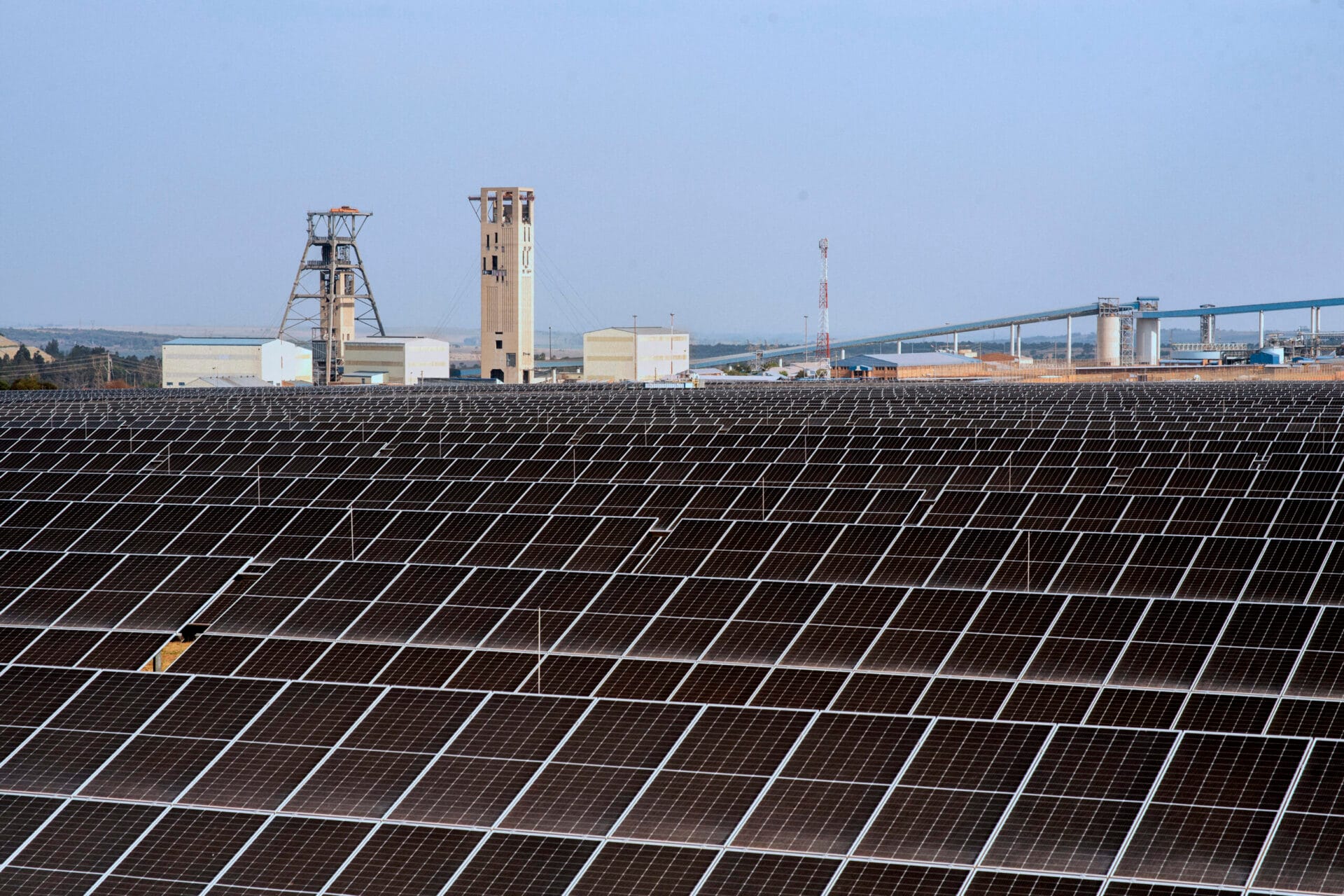
African renewable energy landscape has shifted decisively toward a more flexible, liberalized future following the early delivery of the Springbok Solar Power Project. Developed by the SOLA Group, the 195-megawatt (MW) photovoltaic facility is the first of its kind on the continent to operate on a multi-buyer virtual wheeling platform. Unlike traditional “one-to-one” private power contracts, this model allows a diverse consortium of corporate giants—ranging from mining and telecommunications to retail and finance—to procure clean electricity from a single centralized source regardless of their geographic location.
The facility’s early completion reinforces a burgeoning trend in South Africa’s commercial sector: the pivot toward private, large-scale utility projects to bypass traditional grid constraints. By leveraging virtual wheeling, SOLA Group enables companies to receive a financial refund from Eskom for renewable energy generated elsewhere and fed into the national grid. This mechanism is particularly transformative for firms with distributed footprints, such as Vodacom or Old Mutual, who can now aggregate power consumption across hundreds of small sites into a single, scalable renewable energy contract.
The project’s bankability was anchored by a long-term commitment from Amazon, which served as the cornerstone offtaker. This anchor-tenant strategy unlocked the financing necessary to include a wider array of partners, including Sibanye-Stillwater, Sasol, Afrimat, and Redefine. The innovative structure also introduces “rolling” power purchase agreements (PPAs), providing a rare blend of long-term price stability for anchor buyers and shorter-term, scalable options for others—a significant departure from the rigid 20-year contracts that typically define the industry.
“The Springbok Solar Power Project cements our role as South Africa’s pioneering wheeling IPP, offering clients a range of long- and short-term products,” stated Jonathan Skeen, Managing Director at SOLA Group, in a media statement following the launch. “Our collaboration with Amazon was instrumental in launching South Africa’s first wheeling project in 2020, and now Springbok—Africa’s first multi-buyer virtual wheeling facility. Delivered ahead of schedule, it demonstrates that renewable energy can be reliable, flexible, and scalable.”
Beyond the technical and financial milestones, the project has established a high watermark for socio-economic integration in the Free State’s Matjhabeng Municipality. With R375 million invested in local community programs and the creation of 500 jobs—nearly half of which were filled by youth—the facility is being positioned as a “just transition” blueprint. Environmental dividends are equally substantial, with the plant expected to offset 399,000 tonnes of CO2 annually, equivalent to the carbon sequestration of approximately 6.5 million trees.
The SOLA Group, which now oversees a private wheeling portfolio of 464 MWp, is already looking toward its next frontier. The company plans to break ground on further utility-scale projects in late 2026, which will feature integrated battery energy storage systems (BESS). These additions aim to evolve the current intermittent solar model into a “firm” power solution, offering the dispatchable energy reliability that heavy industry requires to maintain 24-hour operations.
