


By Hydrasales – Leaders in Hydraulic Filtration, Monitoring and Hydraulic accessories
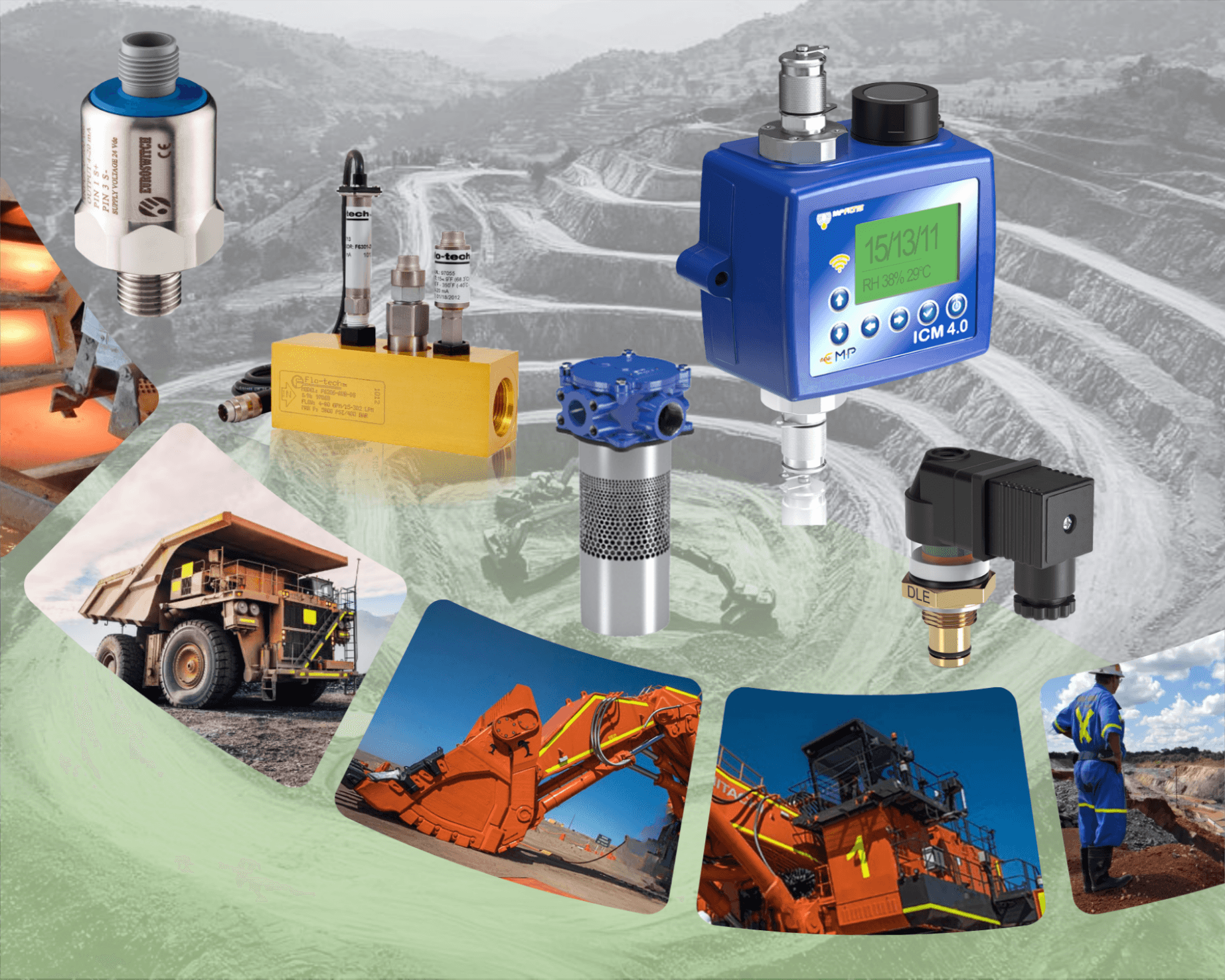
The scale of open pit mining on the Copper Belts of Zambia is vast. Terraced benches cut deep into the earth, haul trucks chug along well-worn routes heavily laden with mined output. Large excavators industriously mine the area, loading vast quantities of material on regular shifts. It is a process meticulously scheduled and where uptime is paramount with production expected to deliver under relentless conditions.
A large thirty cubic metre bucket excavator is at the core of the production process. The hydraulic system generates the force and thrusts required to break, extract and load material, cycle after cycle. The mining operation appears regular, continuous and as scheduled. However, as with most hydraulic systems, the earliest signs of trouble are rarely dramatic, especially in such dusty and dirty environments.
Every system squeaks. The question is whether anyone checks the pulse?
Imagine a scenario where, operators begin to notice initially minor changes in the excavator’s operational behaviour:
- Nothing severe enough to stop production, but enough to cause concern.
- The boom does not function with the same level of sharpness.
- There is a slight hesitation or jerk on the return stroke.
- Movements that were once smooth and precise are touch inconsistent.
In a high-production mining environment, such small aberrations can easily be overlooked. Yet it could be the first indication of the beginning of a possible deterioration within the system.
These excavators power large hydraulic cylinders, pilot driven hydraulic control valves and operate under extreme pressures and loads.
- Hydraulic fluid cleanliness is critical for the demands of the task at hand. Levels of contamination can begin to affect performance.
- Microscopic particles, often invisible to the naked eye, can gradually wear internal surfaces, damage seals or interfere with the fine tolerances of valve components.
Contamination does not typically result in immediate failure. Instead, it works quietly in the background, slowly degrading performance and operation until the system no longer operates as intended.
Now consider how such a scenario might unfold in a well-managed system.
The excavator is equipped with a comprehensive filtration and monitoring setup.
- A high-pressure inline filter is positioned directly downstream of the pump, acting as the first line of defence by capturing harmful particles before they reach sensitive components.
- A return-line filter, fitted with a clogging indicator, ensures that oil returning to the reservoir is cleaned effectively.
- Supporting this, an offline kidney-loop filtration system continuously circulates oil through a contamination monitor, providing real-time cleanliness readings in line with ISO 4406 standards.
Over time, the contamination monitor begins to highlight a gradual increase in particle counts, particularly in the 4 μm and 6 μm ranges. This change may not trigger immediate concern, but it begins to establish a trend.
Shortly thereafter, the return filter’s clogging indicator activates, signalling that the filter element has reached its contamination holding capacity.
Pay attention to such a whisper and you’ll avoid the shout!
At this point, a proactive maintenance response is critically called for.
The filter element is replaced and inspected, revealing fine metallic particles trapped within the media. While small, these particles point to internal wear somewhere within the system. Further investigation could reasonably trace the source to a hydraulic cylinder, where guide rings could have worn over time. This wear allows slight piston misalignment, eventually leading to seal damage and the generation of metallic debris.
Left unchecked, this type of condition could escalate. Contaminants would continue circulating through the system, accelerating wear in valves and other critical components. In a worst-case scenario, if left unchecked, the cylinder could fail under load, resulting in unplanned downtime, costly repairs and a loss of output.
Instead, early detection allows for an appropriately planned intervention.
This is where the true value of filtration and monitoring is confirmed. It is not simply about removing contaminants, but about preserving system performance and preventing failure before it occurs.
Effective protection begins with correct filtration strategy.
High-pressure inline filters, installed immediately after the pump, provide primary protection capturing contaminants at source. Given the high pressures and flow rates involved in modern hydraulic systems, these filters must, at all times, be capable of operating without restricting performance.
Beyond this, suction filters help protect pumps from coarse contaminants during startup, while return-line filters ensure that oil re-entering the reservoir is clean.
Tank-mounted breathers play an equally important supporting role, preventing moisture and airborne particles from entering the system—an especially relevant factor in dusty mining environments.
Together, these components form a layered approach to maintaining fluid cleanliness.
However, depending on the sophistication of the system, having filtration alone is not enough. Without proper monitoring, even the best systems can become vulnerable. Clogging indicators and real-time contamination monitors provide radar like visibility into the inside performance and operation of the system. This allows maintenance teams to respond to performance trends rather than responding to abject failures.
Chris Banks, a sales engineer at Hydrasales says;
”At Hydrasales, our approach to hydraulic system reliability is built on prevention rather than reaction. Our filtration and contamination monitoring solutions include:
• A range of high-pressure inline filters for core system protection
• Return-line and suction filters with flexibility for complete loop filtration
• Tank-mounted breathers and accessories to prevent external contamination
• Contamination monitors and clogging indicators for real-time system insight
• A comprehensive range of absolute filter elements designed for optimum efficiency
We work closely and support our customers to incorporate and adopt the development of clean, efficient and reliable hydraulic systems.
Whether applied in mining, mobile equipment or heavy industrial operations, understanding what your system may be telling you—even in its quietest moments—can make all the difference.”
For more information contact Hydrasales, +27 11 392 3736, harpo@hydrasales.co.za, www.hydrasales.co.za
