

By Sabine Dall’Omo, CEO of Siemens South Africa
Africa has the mineral resources the world increasingly needs, but having those resources is not enough. If the continent is to compete for investment and capture more value from its mineral wealth, its mining industry needs to become more productive, reliable and efficient.
South Africa is a good example of both the opportunity and the challenge. Three recent reports from Minerals Council South Africa highlight the country’s potential as a preferred global supplier of critical minerals, while also pointing to the need for greater competitiveness and investment in the sector.
The question is how that modernisation happens.
Modernisation is often associated with replacing old equipment and building new infrastructure. For much of African mining, that is neither practical nor necessary. Mines are operating with significant existing assets, constrained power, ageing infrastructure and limited capital and specialist skills. The answer is a more practical approach to modernisation that reflects the realities of individual operations.
The more important question is how to make the mines we already have work better.
Modernisation should therefore be an incremental process: connecting existing equipment, improving control systems, adding sensors and using data to identify where an operation is losing energy, time or production.
Technology should not be introduced simply because it is new, but where it solves a real operational problem and delivers a clear benefit.
Energy is a good example. Mining is highly energy-intensive, while across Africa, electricity availability, reliability and cost remain challenges. Improving energy efficiency is therefore not simply a sustainability objective; it is a competitiveness issue.
Understanding where and when energy is consumed can help mines reduce waste and improve performance. Connecting systems across an operation can provide that visibility, from processing plants and substations to conveyors, crushers and ventilation.
But visibility is only the starting point. The real value comes from acting on what the data tells us.
Industrial AI is making this increasingly possible. Siemens’ Senseye Predictive Maintenance, for example, uses machine learning to monitor asset health and identify potential problems before they lead to unplanned downtime. For a mine, this can mean moving away from maintenance based largely on fixed schedules or reacting to equipment failures, towards interventions informed by the actual condition of an asset.
This is important in an environment where replacing a major piece of equipment can be expensive and disruptive. If technology can help extend the useful life of existing assets while improving their reliability, it can make a meaningful difference to the economics of an operation.
The same applies to automation and control. As mines become more connected, AI can help engineers manage growing volumes of data and routine tasks, freeing technical teams to focus on solving operational problems.
This is what practical modernisation should look like: not technology for its own sake, but targeted improvements that address the constraints standing in the way of better performance.
Mining companies cannot invest everywhere at once. A phased approach allows operators to identify their biggest constraints and direct investment accordingly, whether upgrading controls, connecting isolated equipment or improving asset monitoring.
The benefits can extend beyond individual mines. More productive and energy-efficient operations strengthen the competitiveness of the wider mining sector and make it easier for countries to attract investment into mineral processing, manufacturing and other parts of the value chain.
Technology alone will not deliver this. Africa’s mining industry also needs to invest in the people who will operate, maintain and improve increasingly digital mines. Automation will change the nature of many roles, placing greater emphasis on monitoring systems, interpreting data, managing technology and making decisions. This is not simply a question of jobs being replaced by machines, but of how the industry’s skills base needs to evolve.
That transition needs to happen alongside technological investment, not after it. If mines introduce sophisticated systems without people who can use them effectively, much of the potential value will remain unrealised.
Africa does not need to wait until every mine has new infrastructure, uninterrupted power or the latest equipment before improving performance. We can start with what is already there: identifying where an operation is losing value, connecting the assets and systems that can provide insight, and using technology, engineering and skills to address the biggest constraints.
For Africa, modernisation should not be measured by how much new equipment a mine installs. It should be measured by how much more productive, reliable and efficient that mine becomes – and how much more value it can create from the assets it already has.
The critical minerals opportunity will not wait for us. The mines that are best positioned to capture it will be those that can make better use of the assets, energy, data and people they already have.
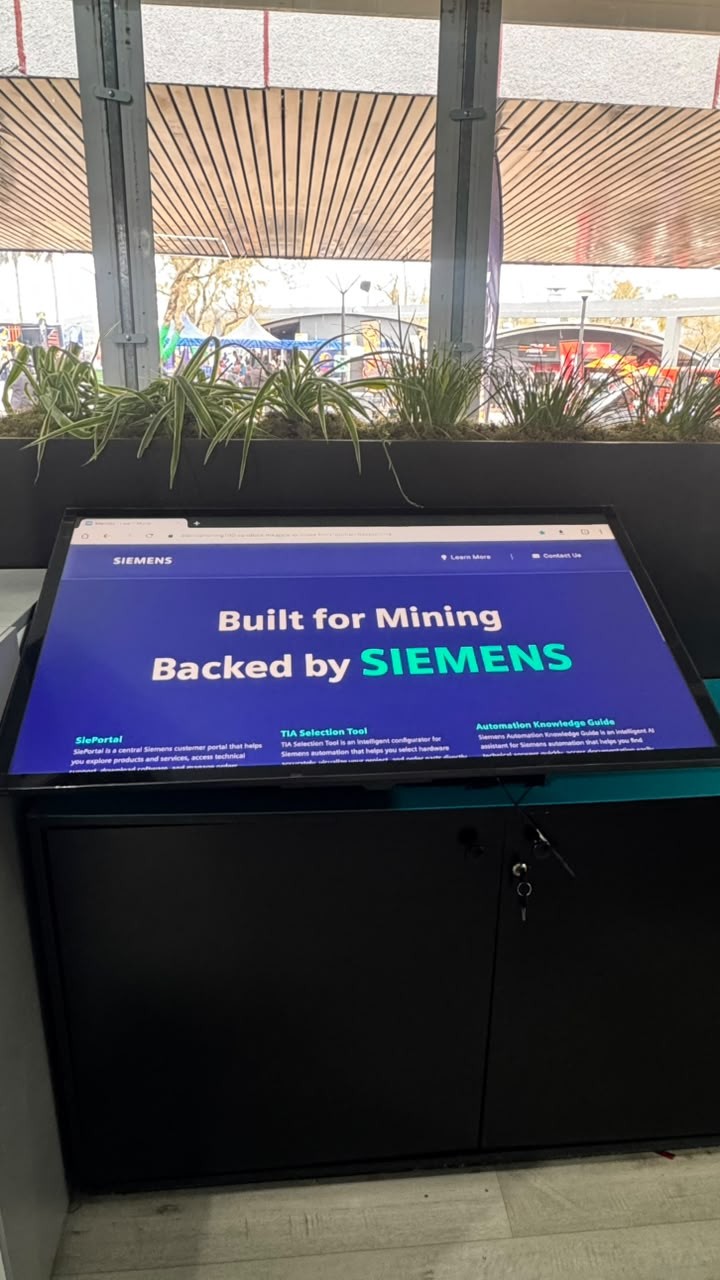
At Electra Mining Africa 2026, Siemens showcased its vision of the “Digital Mine for a Sustainable Future”, demonstrating how the integration of automation, electrification and digitalisation can help mining companies address some of the industry’s most pressing challenges. Through solutions including industrial automation systems, smart electrification, drive technologies, Industrial AI, digital twins and predictive maintenance, Siemens demonstrated how mining organisations can gain greater operational visibility, improve decision-making and enhance asset performance throughout the mining lifecycle.
These technologies are helping mines make more effective use of energy, optimise maintenance strategies, reduce downtime and improve resource efficiency, all while supporting sustainability objectives. The focus is not on technology for its own sake, but on practical solutions that deliver measurable business value and help operators maximise the performance of the assets they already have.
Importantly, the conversations at Electra Mining reinforced a key message for Africa’s mining sector: sustainable growth will depend not only on the resources beneath the ground, but on how effectively organisations use technology, data and human expertise to unlock greater value from those resources. By combining innovation with a pragmatic approach to modernisation, mining companies can strengthen their competitiveness, improve resilience and position themselves to take full advantage of the opportunities presented by the global energy transition.
The opportunity now is to move beyond discussion and translate these ideas into action. Through a combination of digitalisation, electrification, automation and skills development, Africa’s mining industry can build safer, smarter and more sustainable operations that create lasting value for businesses, communities and economies across the continent.
